Physical Address
Starlets Road, P.O. Box M 326, Accra, Ghana
Physical Address
Starlets Road, P.O. Box M 326, Accra, Ghana

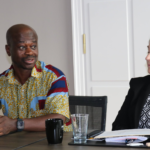
Chair of the African Group of Negotiators (AGN) on Climate Change, Nana Dr. Antwi-Boasiako Amoah, has called for climate education to be recognised as a critical pillar of Africa’s climate response, describing it as essential infrastructure for building resilience, empowering communities, and accelerating implementation of climate solutions across the continent.
Speaking at a UNFCCC SB64 side event organized by the Kingdom of Morocco on Education for Sustainable Development (ESD) and Climate Action in Africa, Dr. Amoah emphasised that climate education is not a peripheral issue but a strategic investment that enables people to understand climate risks, participate in solutions, and strengthen adaptation efforts.
Dr. Amoah noted that while climate finance, technology, adaptation planning, early warning systems, and loss and damage mechanisms are all important, their effectiveness ultimately depends on people’s ability to understand and apply them.
“Climate education in Africa is not a side issue. It is part of our climate infrastructure. It helps people understand climate risks, make informed choices, and take action. Education is a climate solution. It transforms awareness into action and equips communities with the knowledge and skills needed to build resilience. Climate action is lifelong. Climate learning must therefore be lifelong as well.”
Concluding his remarks, Dr. Amoah reaffirmed the AGN’s commitment to advancing Action for Climate Empowerment and ensuring education remains central to climate action across the continent.
The side event brought together policymakers, educators, youth leaders, civil society organisations, and climate experts to explore how climate education and lifelong learning can support implementation of the Paris Agreement and strengthen resilience across Africa.
If we want resilient communities, we must invest in learning
If we want climate-informed decision-making, we must invest in education
If we want sustainable development, we must equip current and future generations with the knowledge and skills needed to navigate an increasingly complex climate reality.
Climate education is not simply about preparing people for the future, it is about empowering them to shape the future.