Physical Address
Starlets Road, P.O. Box M 326, Accra, Ghana
Physical Address
Starlets Road, P.O. Box M 326, Accra, Ghana
The negotiators’ chair says a US$7.6 million Green Climate Fund facility will help African countries strengthen urban planning and prepare projects to protect communities facing floods, extreme heat and other climate threats.
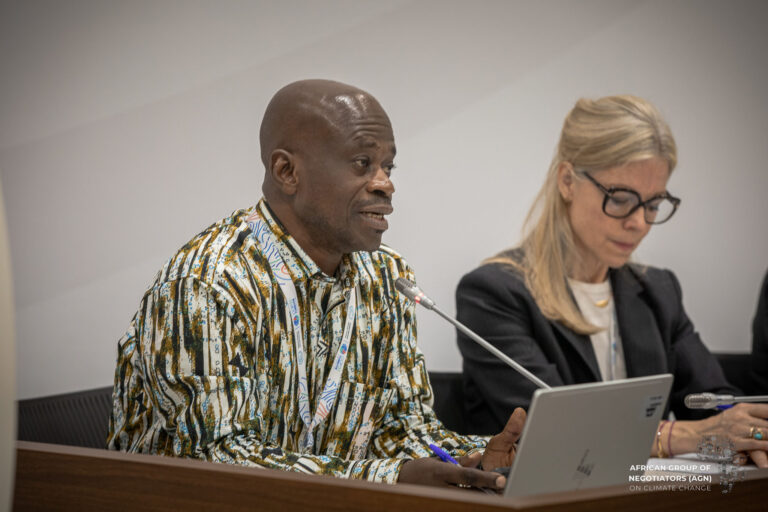
Antalya, Nov. 14, AGN – The African Group of Negotiators on Climate Change (AGN) has called for climate finance to reach local authorities and vulnerable urban communities directly, warning that Africa’s cities and smaller towns are increasingly exposed to the effects of climate change.
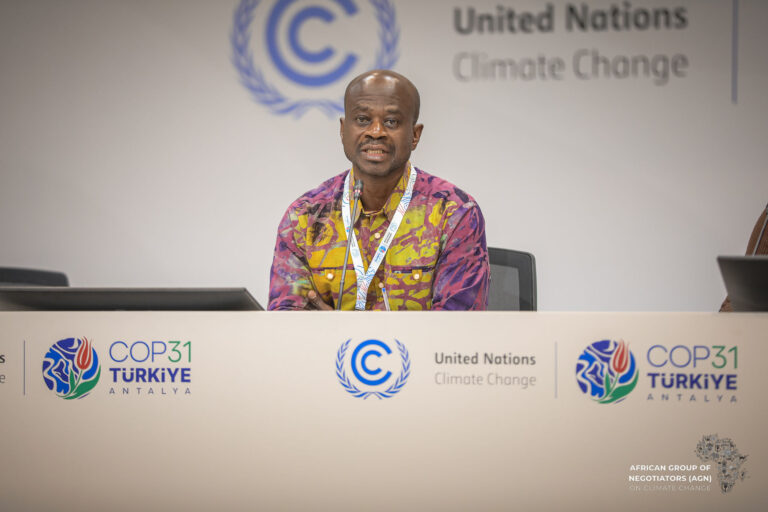
Nana Dr Antwi-Boasiako Amoah, AGN Chair, said urban adaptation must become a central part of Africa’s climate finance priorities, with funding that was predictable and capable of supporting practical solutions at the community level.
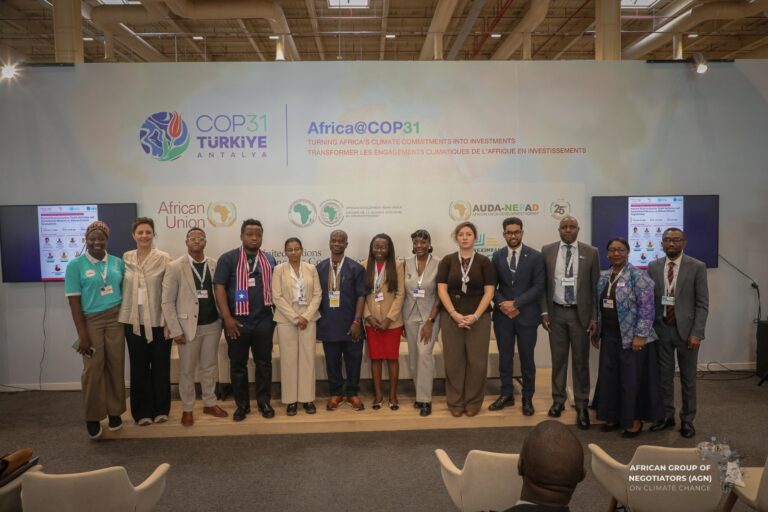
He was speaking at a high-level event to launch the Building Climate Resilience with Africa’s Urban Poor (BCRUP) Regional Readiness Project, which has received an initial US$7.6 million readiness facility from the Green Climate Fund (GCF).
Dr Amoah said the project offered an opportunity to connect international climate commitments with the needs of people living in informal settlements, underserved neighbourhoods and other vulnerable urban communities.
“Across Africa, the urgency of climate action is increasingly measured by the safety and resilience of our cities and communities,” he said.
He said the initiative would help strengthen the link between global climate commitments, including the Global Goal on Adaptation, National Adaptation Plans and efforts to address loss and damage, and action at the local level.
African cities, municipalities and smaller towns are facing increasing risks from flooding, extreme heat, water shortages and environmental degradation.
People living in informal settlements and underserved neighbourhoods are particularly exposed, often with limited resources to recover when climate-related disasters occur.
Dr Amoah said climate negotiations should not focus only on securing financial commitments but also ensure that the resources reached communities and supported projects that could be implemented locally.
He said the BCRUP initiative would help bridge the gap between decisions made at international climate conferences and the everyday challenges facing vulnerable urban residents.
“The challenge is not only to secure commitments for climate finance but also to ensure that those commitments translate into locally owned and implementable programmes,” he said.
The US$7.6 million facility is intended to strengthen the capacity of participating countries and local authorities to plan and prepare climate-resilient urban development projects.
According to the project details presented at the event, BCRUP has a 10-year implementation plan covering 2024 to 2034, with an estimated investment requirement of US$10 billion to scale up climate-resilient solutions across 20 African pilot countries.
The initiative has already conducted climate risk assessments and identified vulnerable areas in more than 60 urban locations.
The new GCF funding is expected to build on that work by strengthening national coordination, improving the capacity of local authorities, supporting access to climate-risk and infrastructure information, and preparing projects that can attract further investment.
Dr Amoah said the facility would also support the development of climate-resilient urban spatial plans and community adaptation plans.
He described the approval of the funding as an important step towards helping African countries prepare investment-ready programmes to address urban climate risks.
The project is championed by the Government of Kenya and brings together UN-Habitat and United Cities and Local Governments of Africa (UCLG Africa), alongside national authorities, municipal leaders and civil society organisations.
The Republic of Türkiye’s COP31 Presidency is also supporting the initiative.
Dr Amoah said the involvement of national governments, local authorities and development partners was important to ensuring that urban adaptation plans reflected the needs of affected communities.
He stressed that the success of the project would depend on securing additional, predictable funding to move from planning to implementation.
“Urban resilience must be recognised as a central element of Africa’s adaptation and climate finance agenda,” he said.
“Finance must reach the local level, and investments must be designed to meet the needs of the people most exposed to climate impacts.”
The AGN Chair said African countries needed to move beyond climate commitments and project preparation towards securing the funding required to deliver measurable improvements in community resilience.
He said the initiative should be expanded to more African countries and cities, with COP32 in Addis Ababa, Ethiopia, in 2027, providing an opportunity to advance discussions on scaling up the programme.
Dr Amoah said the continent’s climate response would depend on access to finance that matched the scale of its needs and reached the communities most at risk.
END/AGN