Physical Address
Starlets Road, P.O. Box M 326, Accra, Ghana
Physical Address
Starlets Road, P.O. Box M 326, Accra, Ghana
Antalya, Nov. 13, GNA – African countries must present a united front at the 31st United Nations Climate Change Conference (COP31) to demand the delivery of promised climate funding, stronger adaptation support and fairer terms for the global energy transition, Dr Zanetor Agyeman-Rawlings, Minister of Environment, Science and Technology, has said.
She said Africa was not seeking new promises but wanted existing commitments to be funded, monitored and delivered on fair terms to help countries respond to the growing effects of climate change.
Addressing the African Ministerial Conference on the Environment (AMCEN) meeting on the margins of COP31 in Antalya, Türkiye, Dr Agyeman-Rawlings said the continent contributed only about four per cent of global greenhouse gas emissions but lost an estimated two to five per cent of its Gross Domestic Product annually to climate-related disasters.
“This is not misfortune; it is injustice, and it must frame every word Africa speaks in Antalya,” she said.
She called on African countries to carry five key demands into the high-level negotiations, covering adaptation finance, climate funding, international climate funds, a just energy transition, and fair trade and carbon markets.
On adaptation, Dr Agyeman-Rawlings said countries at COP30 in Belém had agreed to at least triple adaptation finance for developing countries by 2035, but Africa needed a clear plan to ensure the commitment was fulfilled.
The continent would require about $120 billion annually by 2035 under the commitment, although its estimated adaptation needs stood at $305 billion a year.
This was against international public adaptation finance of only between $28 billion and $32 billion in 2024, she said.
Ghana’s National Adaptation Plan alone required more than $20 billion between 2025 and 2030.
She urged COP31 to agree on a clear baseline, identify funding sources and establish a monitoring system to track progress towards the 2035 target.
“A pledge without a tracking mechanism is not a commitment,” she said.
Dr Agyeman-Rawlings also described the $300 billion annual climate finance target agreed in Baku as a minimum, saying the $1.3 trillion target in the Baku-to-Belém Roadmap should guide efforts to increase funding for developing countries.
Africa needed about $277 billion annually until 2030 to implement its climate action plans, known as Nationally Determined Contributions (NDCs), but existing funding covered only about 11 per cent of that requirement.
She said climate finance should be predictable, mainly in the form of grants or highly concessional funding, and directly accessible to African institutions and communities.
Such funding, she stressed, should not increase the debt burden of developing countries.
The Minister further called for a credible third replenishment of the Green Climate Fund and new contributions to the Fund for Responding to Loss and Damage.
The latter had about $250 million available for its first funding round, against requests estimated at between $2 billion and $3 billion, including $1.4 billion from African countries.
“Loss and damage is not charity; it is liability,” she said.
On the energy transition, Dr Agyeman-Rawlings called for a country-led and grant-based Just Transition Mechanism that would support reliable electricity, local processing of minerals, skills development and the protection of workers and communities.
She said Africa held about 30 per cent of the world’s critical mineral reserves but continued to export much of the resources without processing them locally.
The continent, therefore, needed to strengthen regional industries and value chains through the African Continental Free Trade Area (AfCFTA), particularly in battery production, clean-energy equipment and other green industries.
She welcomed efforts to expand electricity access, linking them to Mission 300, which aims to connect 300 million Africans to electricity by 2030.
Dr Agyeman-Rawlings also warned that trade-related climate measures should not restrict African exports or undermine the continent’s industrialisation plans.
Such measures, she said, should be discussed under Article 3.5 of the United Nations Framework Convention on Climate Change and should not weaken the AfCFTA, which serves a market of more than 1.3 billion people.
On carbon markets, she said the rules under Article 6 of the Paris Agreement should attract real investment, guarantee fair prices for emissions reductions, protect countries’ climate targets and ensure that local communities benefited.
Dr Agyeman-Rawlings said Ghana was ready to share its experience in developing national systems for international carbon trading with other African countries.
Ghana was the first African country to complete the authorisation, issuance, transfer and reporting of Internationally Transferred Mitigation Outcomes (ITMOs), she said.
Under an agreement with Switzerland, the country had transferred 34,705 ITMOs generated from a rural cookstove project.
In 2025, Ghana hosted delegations from Rwanda, Uganda, Sierra Leone and Mozambique to share its experience.
The country was now offering to support an AMCEN-African Group of Negotiators (AGN) peer-learning programme on Article 6 readiness, focusing on carbon registries, authorisation and the accounting systems needed to prevent countries from claiming the same emissions reductions.
These are no reversal of the Belém commitment to triple adaptation finance; no new obligations on African countries without the funding needed to meet them; and no double-counting of climate finance or delivery of support mainly through loans.
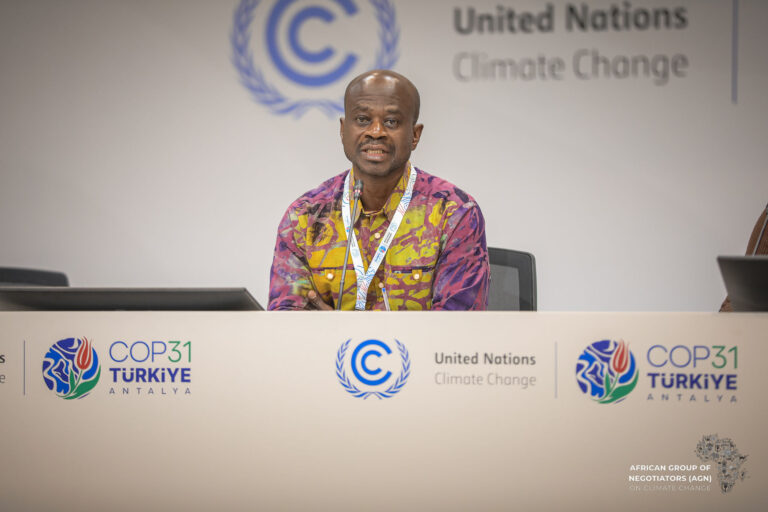
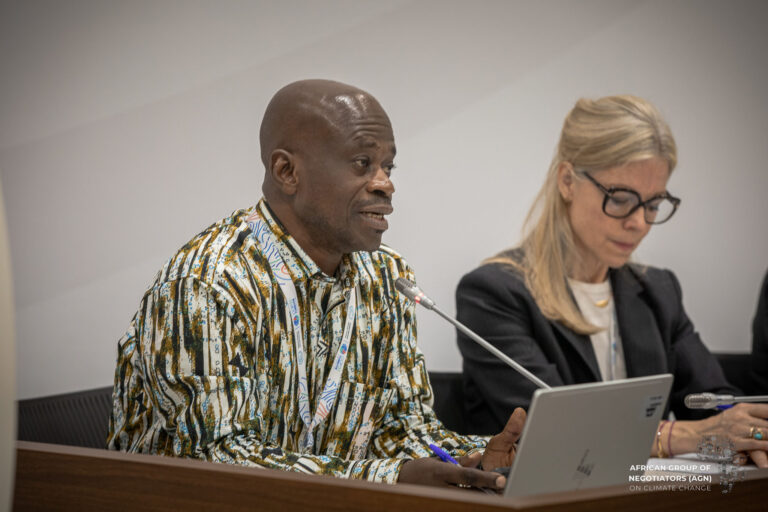
She expressed Ghana’s support for Nana Dr Antwi-Boasiako Amoah, Chair of the African Group of Negotiators on Climate Change, and his team, saying unity would be critical to securing the continent’s interests.
She said Ghana, as First Vice-Chair of the African Union and host of the AfCFTA Secretariat, would work to connect Africa’s climate positions with the Union’s political and economic priorities.
The outcomes of COP31 would also shape preparations for COP32, scheduled to take place in Addis Ababa, Ethiopia, in 2027.
“As expected Chair of the African Union in 2027, Ghana will carry these demands from Antalya to Addis Ababa,” she said.
Dr Agyeman-Rawlings said African countries had presented climate action plans and were developing carbon markets, but still lacked the financial support promised by international partners.
“We will not leave Antalya with words alone. Let us leave with finance on the table and a clear road to Addis Ababa,” she said.
END/AGN