Physical Address
Starlets Road, P.O. Box M 326, Accra, Ghana
Physical Address
Starlets Road, P.O. Box M 326, Accra, Ghana
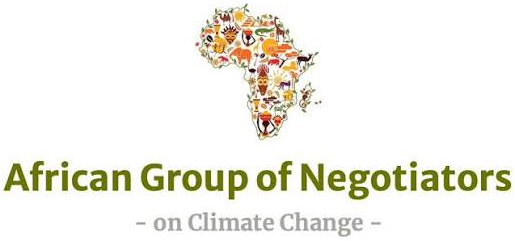
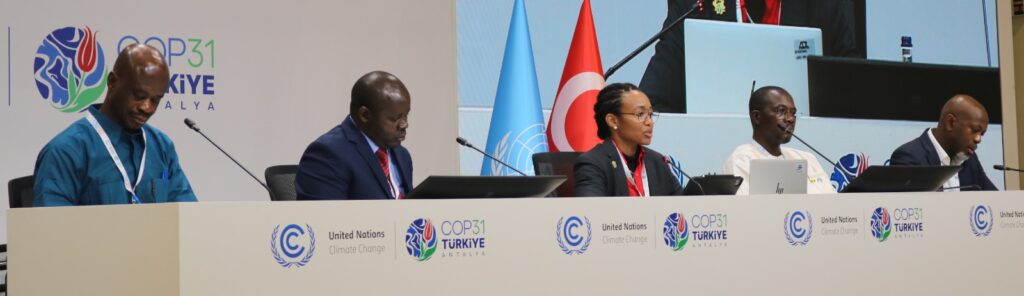
Ministers from Ghana, Zambia, Senegal, Sierra Leone and Kenya called for predictable public finance, a timetable to deliver it and a just transition that creates economic opportunities in Africa.
ANTALYA, Türkiye, 20 November 2026 — In the final hours of COP31, African ministers have urged developed countries to fulfil their climate finance obligations, calling for a clear plan to atleast triple adaptation finance by 2035. They have warned that repeated delays were eroding trust in the UN climate process as communities face mounting losses from floods, droughts and extreme heat.
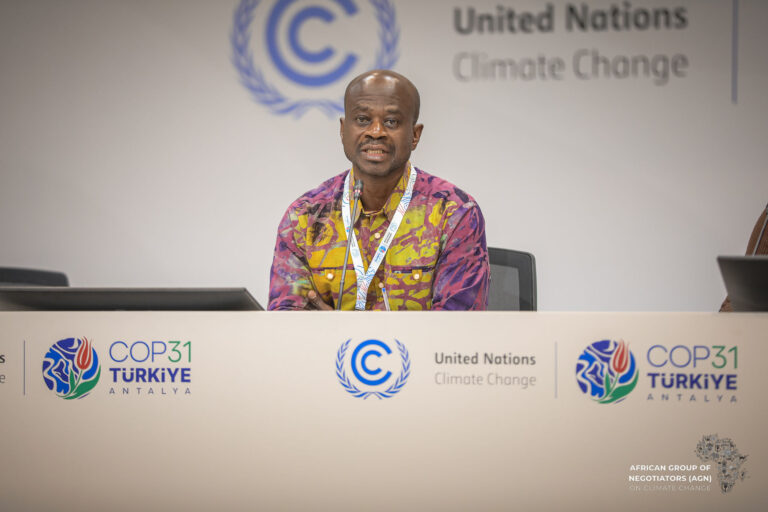
“We didn’t come here to beg,” said Dr Zanetor Agyeman-Rawlings, Ghana’s Minister for Environment, Science and Technology, who led the joint press briefing. “We came here to claim what is rightfully ours for our people who are suffering the brunt of anthropogenic activities of developed countries.”
Presenting the ministers’ joint statement, Agyeman-Rawlings said inaccessible finance, technicalities and shifting goalposts were excluding African communities from decisions that directly affect their lives. She said the Antalya outcome should give countries the finance, technology and capacity to implement the commitments they have already made under the Paris Agreement.
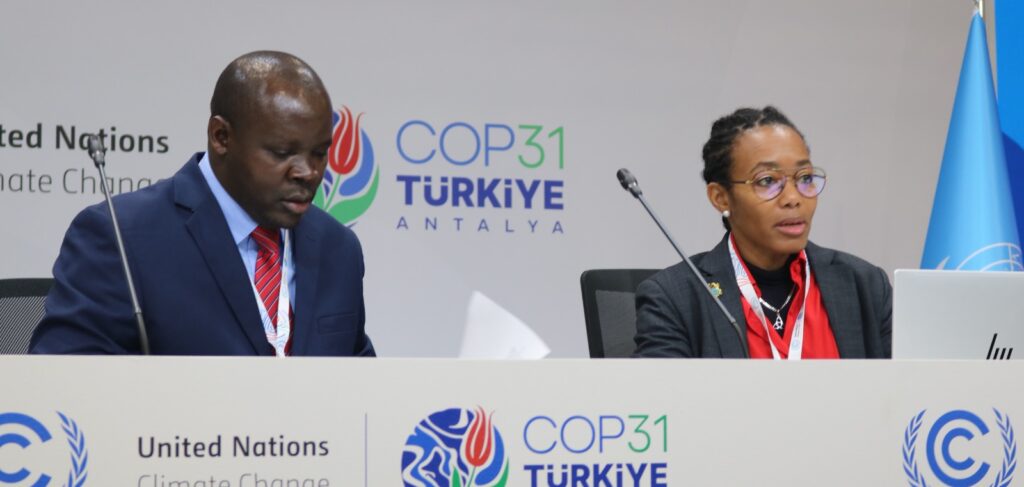
“Finance must be new, predictable and grant-based. African ministers will not allow new obligations without matching finance, technology and capacity-building support,” she said.
From a financing pledge to a delivery plan
Agyeman-Rawlings called for a fixed baseline to measure progress on adaptation finance, annual milestones, public tracking and a delivery plan. She cited the US$120 billion adaptation finance figure that appeared in an earlier cover decision draft. “A figure alone is not a commitment,” she said.
International public adaptation finance flows from developed to developing countries reached US$28.2–31.7 billion in 2024, according to the UN Environment Programme. Developing countries’ estimated adaptation needs are US$305 billion a year by 2035.
The presidency’s 19 November revision dropped the quantified adaptation finance target. It proposed discussing a delivery pathway under the climate finance work programme for consideration in 2027 and creating an Antalya-to-Addis Ababa roadmap on adaptation and resilience finance under the COP31 and COP32 presidencies. Both proposals were still under negotiation at the time of the briefing.
“The draft text on the climate finance work programme, the just transition mechanism, and the global goal on adaptation have yet to appear in a form that makes sense to the people of Africa,” Agyeman-Rawlings said. She urged Parties to put measurable commitments in the formal negotiating tracks so countries and the public could track delivery after Antalya.
“Africa is not a continent merely seeking assistance,” she said. “We are asking the developed countries to keep promises that they already made.”
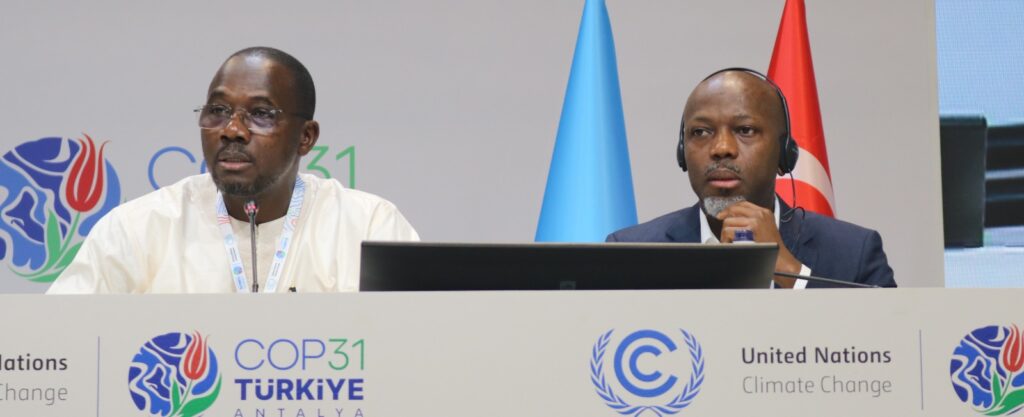
Senegal’s Minister of Environment and Ecological Transition, Aliou Gori Diouf, warned against shifting the burden of providing climate finance to developing countries.
Minister Diouf said Article 9.1 of the Paris Agreement requires developed country Parties to provide financial resources to help developing countries mitigate and adapt to climate change. Article 9.2 encourages other Parties to provide support voluntarily.
“You set fire to the bush, and you have water tankers. I have only a bucket of water, and you ask me to use my bucket to put out the fire you started,” Diouf said, speaking in French. He also called for an international financial system that gives African countries better access to climate finance as they contend with high debt burdens.
Africa wants to build industries as it decarbonises
“Africa has a legitimate right to develop,” Agyeman-Rawlings said. Drawing on the history of the transatlantic slave trade and colonial extraction, she warned against an energy transition that would again see wealth generated from Africa’s resources accrue elsewhere.
“Africa must take her rightful place and be a part of the transition and not merely a resource provider for the transition that others are going through,” she said.
Zambia’s Minister of Green Economy and Environment, Dr Gilbert Siame, called for an outcome that gives adaptation comparable weight to mitigation and addresses loss and damage alongside Africa’s industrial development.
Dr. Siame said the prospect of global warming overshooting 1.5°C made it more urgent to invest in adaptation technology and skills.
Minister Siame pointed to efforts by Zambia and the Democratic Republic of the Congo to develop battery manufacturing as an example of how African countries could retain more value from the minerals they produce, warning that carbon border measures could make it harder for African countries to move into higher-value manufacturing.
“We do not want our minerals to just power green transition elsewhere. We want it to happen also on the African soil,” Siame said.
Climate impacts are already disrupting health care and livelihoods
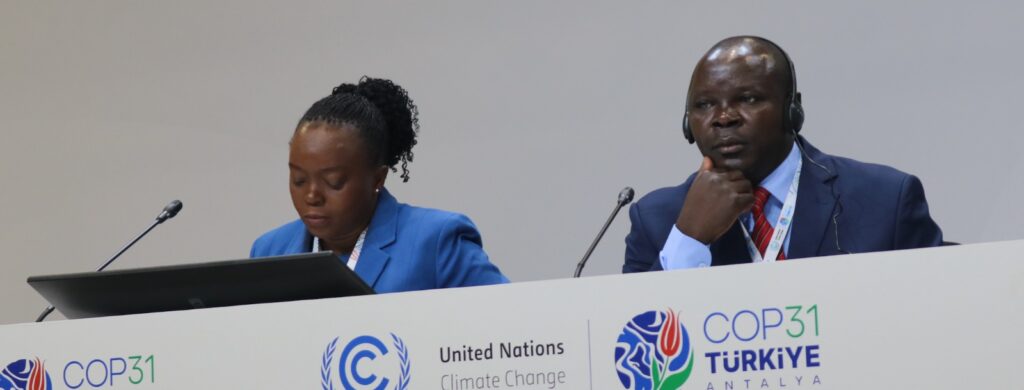
Sierra Leone’s Minister of the Environment and Climate Change, Jiwoh Abdulai, urged Parties to act on the Belém call to at least triple adaptation finance by 2035. He warned that spending another year debating a baseline would delay delivery.
“We need to see a strong signal from developed countries that agreements that have been made will be honoured,” Abdulai said. He described farmers losing harvests, children struggling to concentrate in overheated classrooms and pregnant women seeking care in clinics exposed to extreme heat.
Kenya’s Cabinet Secretary for Environment, Climate Change and Forestry, Dr Deborah Mlongo Barasa, described how successive droughts and floods had affected farmers, pastoralists and fishing communities. She said flooding had submerged clinics and schools, keeping children from getting immunised or attending classes.
“We are being asked to carry targets without a means of implementing or of how to meet them,” Barasa said.
With negotiations still under way, Agyeman-Rawlings said African ministers were ready to work with the COP31 presidency and other Parties towards an outcome that was “credible, ambitious, yet fair”. She warned that failing to deliver on existing commitments would continue to undermine trust in the process.
AGN/END